
Blessed to be quietly crafting upon Yaegl Bundjalung lands, hoping to ripple out some good vibes....
Tuesday, May 31, 2011

Sunday, May 29, 2011
Wolfesbane...
I have been doing my otherworldly journeying thang the last few days, more shamanic than my more usual greenwitchyness, or so I thought...
A couple of times Id ended up at a native american pow wow, stayed a little to watch dancers, then thought this is not my ancestral tradition and moved on. At one point however i saw flashes from around the world showing the common thread running through all traditions of women processing food and medicines, women in africa pounding grain, an european kind a chick using a mortar and pestle, native americans grinding corn....
Last night as I was returning my wolfriend called after me, check out 'wolfsbane' laughing, it was gobbledegook to me at the time...
 Anyways, so I think what the **** is wolfbane for about 1/2 a second, then pull out the herb books. Came across wolfbohne, which is lupins, a good green mulch for poor soils and that made sense for the garden here. I just decided to pull out an olde booke to doublecheck, and theres wolfesbane in the index, aconite, Aconitum napellus. As i read more I find shes, highly poisonous, and a plant that, along with hemlock, was used in 'flying ointments'. Whats flying but the same thing as the 'shamanic' journeying done with repetitive rhythm or other psychoactive plants. This shit is global, and the european witches were that part of the worlds version of shamans. Love it when life messes with labels and information comes through in such experiential ways. Thats one way to learn about herbs...
Id never heard of wolfsbane, but you can bet my wolf friend had, as it was used to poison arrowheads to hunt wolves....
A couple of times Id ended up at a native american pow wow, stayed a little to watch dancers, then thought this is not my ancestral tradition and moved on. At one point however i saw flashes from around the world showing the common thread running through all traditions of women processing food and medicines, women in africa pounding grain, an european kind a chick using a mortar and pestle, native americans grinding corn....
Last night as I was returning my wolfriend called after me, check out 'wolfsbane' laughing, it was gobbledegook to me at the time...

Id never heard of wolfsbane, but you can bet my wolf friend had, as it was used to poison arrowheads to hunt wolves....
Thursday, May 26, 2011


We have to admit that the language, in vegetation, of the land has been altered in many waves of plant arrivals, each changing the character of what grows in a certain place. Some species have adapted so well as to overtake and force out others. How do you choose what to keep or pull out in your garden, or on your land? Its a matter of perspective, and i would suggest a process in action that contains its own paradoxes. Lantana for example, recognised as a hideous invasive force in bushland, was originally brought into the country because it formed hedges with clusters of pretty flowers. Forms hedges alright, sometimes metres high along creeklines. In one context, gardens, it worked for a while, but when it busted out of context, it dominated. Yet even while doing so, provided its delectible berries to native birds. Its thicket like form created nesting sites in situations where other habitat may have been destroyed. Vegetation is often an evolving, rather than a static thing, and may well depend on who is caretaking a site, or not, as to how it develops and changes.
Certainly since the coming of white boatpeople to Australias shores plants travelled with them, have taken root and flourished. With furthur layers of folks coming from all over the world (some of who would have been happy to find plants like dandelion growing in their new home) came different plants, some of which naturalised.
"these weeds are now part of a 'new' Australian ecology."
Greg Czechura, Queensland Museum
As someone looking for medicines and food to harvest, also just blown away by natures diversity, I hope my senses are open to all kinds of plants. The pictures above of red clover and a waratah each hold beauty for me, amazingly similar in their form though originating on oppposite sides of the globe...
Resources:
Robin Buchanon. 'Bush Regeneration'.
Tim Low. ' The New Nature: Winners and Losers in Wild Australia'.
Suzanne Ermert. ' Gardener's Companion to Weeds'.
Tuesday, May 24, 2011
red clover, white clover...
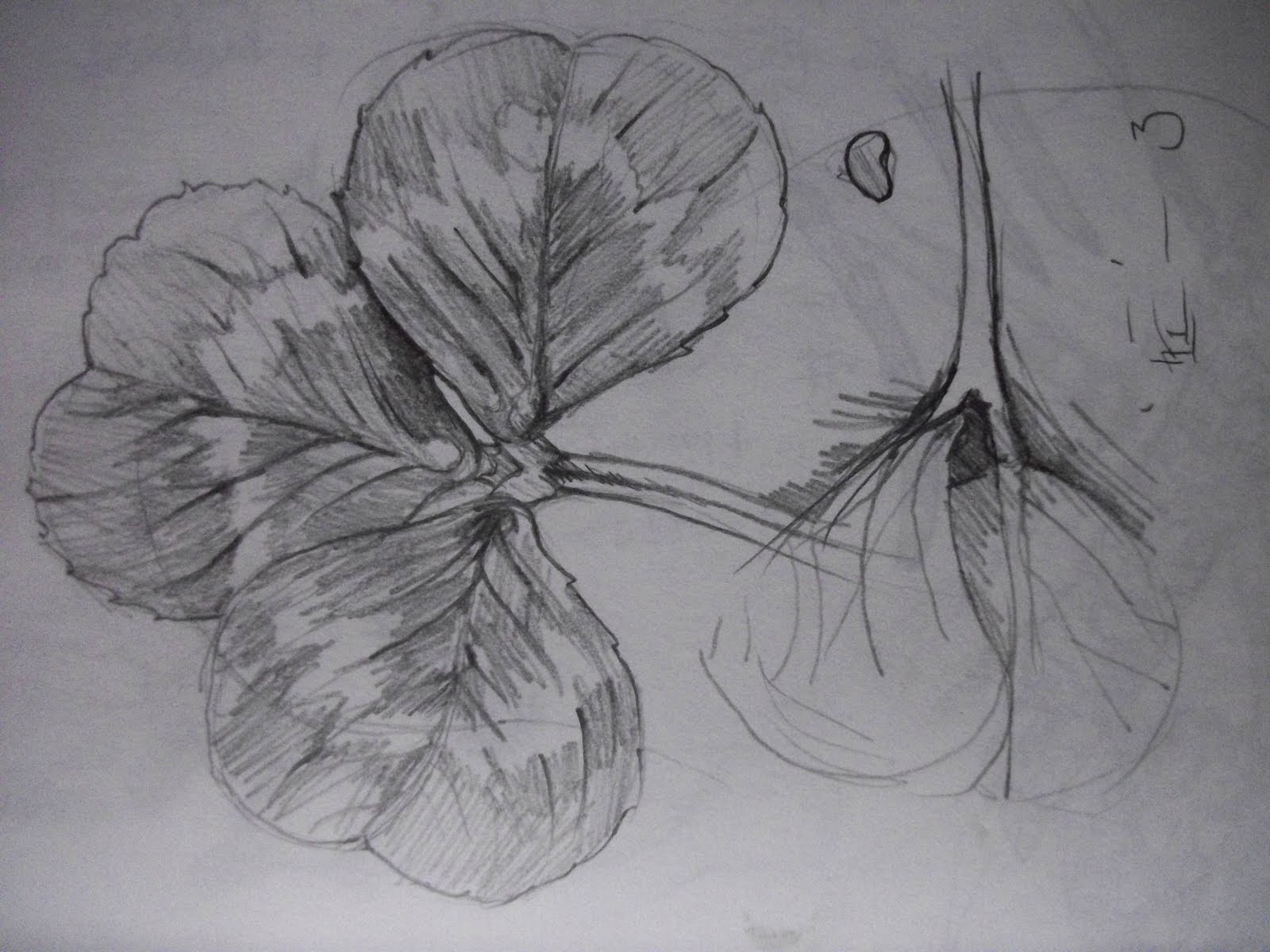
Both from the same family, Red Clover, Trifolium pratense, is the one most often used in healing but in Australia, White Clover, Trifolium repens, seems far more common. As far as I know they have similar properties but the white clover is much milder in its effects. These sketches are of white clover found growing in a lawn.....




Violet, Viola odorata.
Another mucilaginous plant after plantain, whos leaves can be eaten too.
My experience of violet would seem to affirm the reputation of her leaves, and flowers, as dissolvers of growths and tumours both internally and externally. A neighbours dog had a large cancerous growth at her throat, which was causing discomfort breathing, and continuing to grow. She would pick the leaves,mince them, put them to brew in milk and then strain off the plant material, giving the dog the milk to drink.Twice a day if I remember rightly. It was a kind of last ditch effort, but the growth stopped, the dog was not only able to come of vet prescribed meds but ended up living for years more. A sweet ending indeed....

Resources: Juliette de Baracli Levy. The Complete Herbal Hanbook For the Cat and the Dog
Monday, May 23, 2011
Plantain....
Plantain : Plantago lanceolata
Youll know her by her parallel veined leaves, running from stem base to tip. Her leaves form a rosette, from the centre of which emerge flower spikes that form seedheads. She grows in lawns, where soil has been disturbed or compacted. Shes a soothing one indeed, her leaves crushed up or chewed and put on an insect bite give speedy relief, handily she often grows where bees harvest. She has a knack for healing skin inflammation, wounds, sores, scalds or burns, and excma. The seeds of plantain ( and Plantago major) were recovered from the stomachs of Tollund Man and Grauballe Man, iron age men dug from peat bogs of Denmark. Plantains are amongst the most ancient weeds from northern Europe.

 Ive had some plantain leaves infusing in olive oil for some 4 months (oops). I finally strained off the oil to make a salve with it. My 8/10 of a litre of infused oil went into the bowl of a double boiler setup, with three chopsticks to ensure against burning. Turned up the heat till water was boiling, and then gradually added 100grams of grated beeswax to the oil. I kept stirring until all the wax dissolved. Poured the mix into jars and lipbalm containers, and theres plantains lovely green soothing salve!

Youll know her by her parallel veined leaves, running from stem base to tip. Her leaves form a rosette, from the centre of which emerge flower spikes that form seedheads. She grows in lawns, where soil has been disturbed or compacted. Shes a soothing one indeed, her leaves crushed up or chewed and put on an insect bite give speedy relief, handily she often grows where bees harvest. She has a knack for healing skin inflammation, wounds, sores, scalds or burns, and excma. The seeds of plantain ( and Plantago major) were recovered from the stomachs of Tollund Man and Grauballe Man, iron age men dug from peat bogs of Denmark. Plantains are amongst the most ancient weeds from northern Europe.


Thursday, May 19, 2011
Australian Native Plants, some potent forces....
Traditions of bush food, and medicines, are passed on orally as an adjunct to learning the landscape here, and this has in places been undeniably fragmented by colonisation, but reweaving is and has been going on. Records kept in a written culture are expanding as Indigenous communities speak for themselves, teach and create educational syllabus. These are a good source of learning for those of us with an interest, and provide a continuity different to the documents of early voyages and expeditions from Europee.
A crucial part of knowing what you can eat or make medicines is often in how to prepare them and that applies everywhere. For example, the ‘cycad palm’ seeds that look so delectable, (Australia has 28 species) all require extensive processing. Be that baking in coals for an hour and then soaking in water for 6 to ten days, or roasting, pounding and then soaking in water for two weeks. A plant like the bunya-bunya pine has large tasty nuts which simply require boiling and then peeling off of the outer husk to reveal a nutty treat. The macadamia nut is a low preparation nut by comparison. Its a question of getting to know the plants and doing some research. They sit at different points along a sliding scale of preparation required to maximise nourishment and minimise harm.
Perhaps being some of the most ancient species on the planet some species feel they’ve done their time as food and medicine.The women who did most of the gathering had to be skilled botanists. Plant food sources were up to 80% of the diet in desert areas, down to about 40% on the coast
Fruits seem to be some of the more approachable bushfoods. Some , like those of the lilly pilly, Syzygium species, are now commonly available in nurserys.

I would like to talk about pigface, Carpobrotus rossii, so named because of the fruits ‘snout and ears’. If you get coastal in your travels you would probably recognise her. Vibrant pink flowers and succulent leaves trail along the sand. The fruits redden as they reach maturity and when ripe you pick em and simply squeeze the fruit out of its skin and into your mouth. They taste almost like a salty kiwifruit.
"In the early days in this big wide open country, there was always healing cures here on the Land -the healing songs, fat, paintings and the healers - and its still the same now, even after all the old-time elders have passed on."
Veronica Perrurle Dobson, Arrernte traditional healer, 2007
Medicines are invaluable to identity and community health, sharing them is a gift and harvesting while also maintaining a plant poulation is a skill. For example, a plant may be slow growing and hence not recover easily from too large a harvest, some tubers or roots when pulled thats it for that individual plants life cycle but if you break a small piece off and replant itm thatll shoot . So if you want to nourish a patch, learn about how it grows over time and keep an eye out for its health. Itll be appreciated and thats a nice vibe....
Different preparation techniques which could be used in creating medicines, as in other traditions, include ointments made with animal fat, poultices, 'kino' (dried sap) and 'smoking' or inhalations. Smoking can be used both medicinally, and ceremonially. A small fire is lit and the leaves put on, usually picked from plants high in essential oils like eucalypts, and tea tree, Melaleuca alternifolia. Their ability in the treatment of colds and flus, or as an antibacterial to prevent infection has led to the essential oils from them being used globally. These can burn the skin neat, and are best used diluted.
The vegetation of Australia is so varied that theres much to be learned. But I did just want to write something to acknowledge the potency of some Australian native plants and the skills required to 'live on the land', as a follow up to the previous post.
Resources:
Veronica Perrurle Dobson. 'Arrente Traditional Healing'.
Institute for Aboriginal Development. 'Punu: Yankunytjatjara Plant Use'.
Minmia. 'Under the Quandong Tree'.
Peter Latz. 'Pocket Bushtucker'.
Tim Low. 'Wild Food Plants of Australia' and 'Wild Herbs of Australia and New Zealand'.
E.V. Lassak and T. McCarthy. 'Australian Medicinal Plants'.
Compiled by Michael Richardson. 'Your Own Resources: A Practical Guide for Self Supporting People in Australia'.
Subscribe to:
Posts (Atom)